Pre-Workout Ingredients: What’s Actually in That Tub (2026)
The pre-workout supplement category generates over $14 billion in annual revenue globally, and a striking percentage of that money is spent on products containing sub-effective doses of the ingredients on their own labels. The pattern is consistent across the supplement aisle: marketing-friendly ingredients listed in impressive-looking quantities, sandwiched into proprietary blends that mathematically cannot all be at research-validated doses, sold at premium prices to lifters who have no way to verify any of it.
This guide is the verification. We’ve taken apart the formulas of over 50 popular pre-workout products and cross-referenced every common ingredient against the actual research on what it does, how much you need, and what your average tub probably contains. By the end, you’ll know exactly which ingredients earn their spot in a pre-workout, which ones are marketing decoration, and how to read a label well enough to spot underdosing in seconds.
Every claim here is anchored to peer-reviewed evidence: ISSN position stands on caffeine, creatine, and beta-alanine, plus meta-analyses and RCTs on the supporting cast. Where the science is overwhelming, we say so plainly. Where it’s preliminary or contradicted, we flag it. And where an ingredient is marketing theater dressed up in research language, we name it.
How Pre-Workout Formulas Actually Work
A pre-workout supplement isn’t a single magic compound — it’s an ingredient stack engineered to hit multiple physiological targets at once. Understanding the categories of effect is the first step in evaluating whether a given formula actually does what it claims.
The Three Categories of Pre-Workout Effects
Almost every ingredient you’ll find in a pre-workout falls into one of three functional categories:
- Central Nervous System Stimulants — caffeine, sometimes theacrine, occasionally yohimbine or DMHA. These work on the brain and nervous system to increase arousal, focus, and perceived energy. The “wired” feeling people associate with pre-workout almost entirely comes from this category.
- Intramuscular Buffers and Substrates — beta-alanine, creatine, betaine. These work inside the muscle cell to delay fatigue, regenerate ATP, or improve cellular hydration. The effects build over weeks of consistent dosing, not within a single workout.
- Vasoactive Compounds — citrulline, arginine, agmatine, nitrates. These promote nitric oxide production and vasodilation, producing the “pump” sensation lifters notice during high-volume training and theoretically supporting nutrient delivery to working muscle.
A well-formulated pre-workout typically combines ingredients across all three categories at research-validated doses. A poorly formulated one stuffs trendy ingredients at token amounts into a proprietary blend and relies on the caffeine doing most of the actual work.
The Dose Math Problem
Here’s the issue that almost no consumer-facing pre-workout content addresses. The effective research doses for the four most-studied pre-workout ingredients are:
- Caffeine: 200–400 mg per serving
- Creatine monohydrate: 3–5 g daily
- Beta-alanine: 4–6 g daily (often split across multiple doses)
- L-citrulline or citrulline malate: 3–8 g per serving
Add those up: roughly 10–17 grams of active ingredients at full research doses, before adding anything else. A pre-workout scoop is typically 8–15 grams total — and that total has to include flavoring agents, sweeteners, anti-caking agents, and any other ingredients on the label.
The implication: any pre-workout claiming to deliver effective doses of all four core ingredients in a single 10g scoop is mathematically lying, hiding underdosing inside a proprietary blend, or both. This is the single most important framework to bring to label reading. See our complete performance supplements hierarchy for the broader context on how individual ingredient evidence stacks together.
The Evidence-Backed Core (Tier S Pre-Workout Ingredients)
These are the four ingredients with overwhelming evidence, research-validated dosing, and consistent effect sizes. If your pre-workout doesn’t contain at least three of these at effective doses, you’re paying for flavor and marketing — not for performance.
Caffeine
Caffeine is the most-studied ergogenic compound in human history. The 2021 ISSN position stand on caffeine and exercise performance synthesized hundreds of trials and concluded that doses of 3–6 mg per kilogram of body weight taken 30–60 minutes pre-exercise reliably improve muscular endurance, strength, sprint performance, jumping, and pain tolerance during training (Guest et al., 2021).
For an 80 kg lifter, that’s 240–480 mg per session — well-aligned with the 200–400 mg per serving that mainstream pre-workouts typically contain. The mechanism is adenosine receptor antagonism: caffeine blocks the receptors that normally signal fatigue, allowing higher central nervous system drive and lower perceived exertion at any given workload.
Effective dose: 3–6 mg/kg, 30–60 minutes pre-training.
Typical pre-workout label: 150–400 mg per serving. Often adequate, but verify against your body weight.
Red flag: caffeine listed only as part of a “stim matrix” with no individual dose disclosed.
Creatine Monohydrate
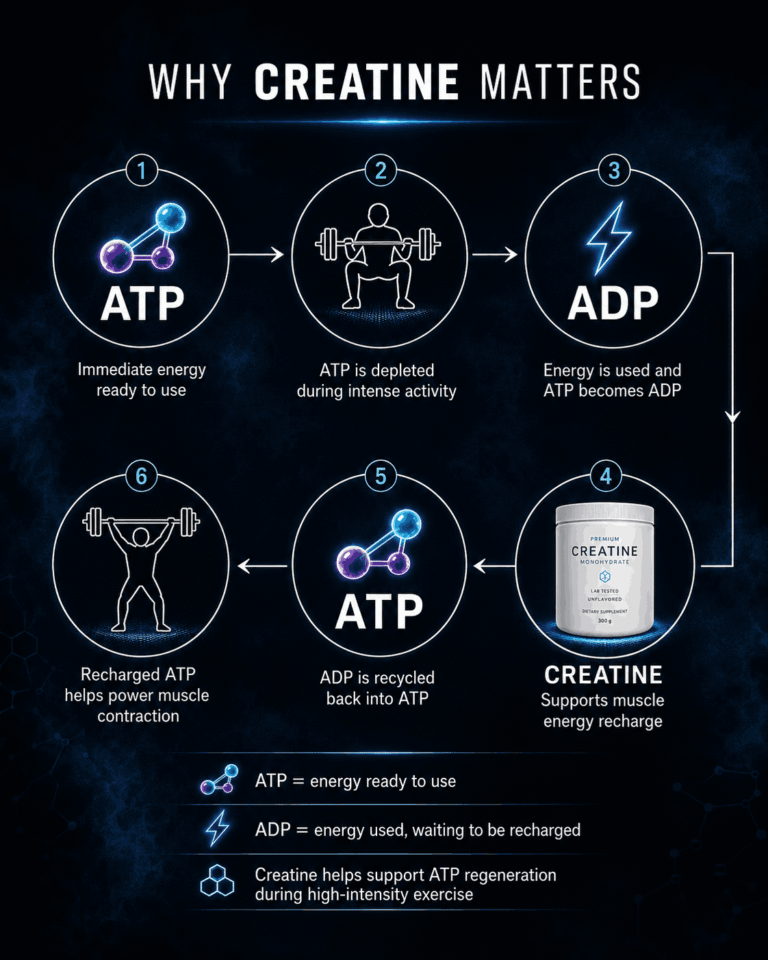
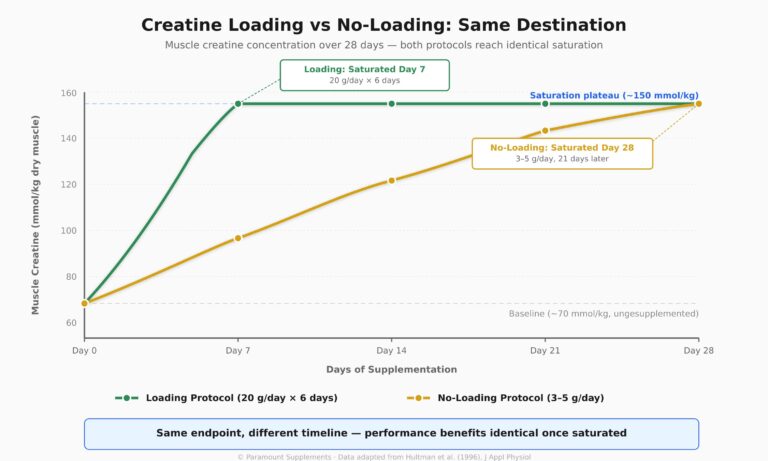
Creatine is one of the most reliably effective supplements ever studied — but its inclusion in pre-workout formulas is one of the most misunderstood. Creatine doesn’t work acutely on the day you take it. It works by accumulating in muscle cells over weeks of consistent daily dosing, eventually saturating the phosphocreatine pool that fuels short-duration maximal efforts (Kreider et al., 2017).
This has two implications for pre-workout formulas. First, taking creatine pre-workout is fine — but it’s not “for that workout” specifically. It’s just one daily dose of a supplement that needs to be taken consistently regardless of when you train. Second, the typical 1–3 g of creatine in most pre-workout matrices is below the 3–5 g daily target, meaning even daily pre-workout users may not be hitting saturation.
Effective dose: 3–5 g daily, consistency matters more than timing.
Typical pre-workout label: 1–3 g per serving — often under-dosed for a complete daily dose.
Practical: if your pre-workout has less than 3 g, supplement additional creatine separately. See our complete evidence-based creatine guide for the full mechanism and dosing breakdown.
Beta-Alanine
Beta-alanine elevates muscle carnosine concentrations over 10–12 weeks of consistent dosing, buffering intracellular pH during high-intensity exercise lasting 60 seconds to 4 minutes (Trexler et al., 2015). The performance translation: more reps before failure, more rounds at the same intensity, better repeated sprint capacity.
Like creatine, beta-alanine works through accumulation rather than acute effect. The dose in your pre-workout isn’t doing anything for “that workout” — it’s a daily contribution toward the carnosine concentration that benefits all future workouts. The catch: the 1.6–3.2 g per serving common in pre-workouts is below the 4–6 g daily target, meaning pre-workout-only beta-alanine intake is typically insufficient.
The tingling sensation (paresthesia) many users experience is harmless and unrelated to whether the supplement is working. We cover the full mechanism, dosing protocols, and stack interactions in our complete beta-alanine guide.
Effective dose: 4–6 g daily.
Typical pre-workout label: 1.6–3.2 g per serving — sub-effective if it’s your only source.
Practical: supplement additional beta-alanine separately to hit the daily target.
L-Citrulline / Citrulline Malate
Citrulline is the most-underdosed ingredient in the pre-workout category, full stop. The research dose for performance benefit is 6–8 g of citrulline malate or 3–6 g of pure L-citrulline taken 30–60 minutes pre-training. The mechanism is conversion to arginine and subsequent nitric oxide production, which supports blood flow, reduces perceived effort, and increases repetitions to failure during multiple-set training. A 2010 trial showed a 18.5% increase in bench press repetitions across multiple sets after a single 8 g dose of citrulline malate (Pérez-Guisado & Jakeman, 2010).
What you’ll typically find in a pre-workout label: 1–4 g of citrulline, often as part of a proprietary “pump matrix.” That’s well below the research dose, which means the labeled benefits aren’t being delivered. This is the single most common pre-workout under-dosing pattern.
Effective dose: 6–8 g citrulline malate or 3–6 g L-citrulline.
Typical pre-workout label: 1–4 g — frequently sub-effective.
Red flag: citrulline listed inside a proprietary “pump matrix” with no individual dose disclosed.
Conditional Tier A — Worth Including If Dosed Properly
The next tier of ingredients have real evidence behind them but aren’t universal additions to every formula. They earn their spot when the dose matches the research and the context fits your training. Here’s how each one stacks up.
Taurine
Taurine is one of the few “second-tier” pre-workout ingredients with consistent positive evidence and a dose that actually fits in a typical pre-workout serving. A 2018 systematic review of acute taurine ingestion on endurance performance found modest but reliable improvements at 1–2 g per serving, taken 60–120 minutes pre-exercise (Waldron et al., 2018).
The mechanism appears to be a combination of anti-oxidant effects, cellular hydration support, and modulation of neuromuscular function. Taurine is one of the more commonly accurately-dosed ingredients in mainstream pre-workouts. One practical note: taurine and beta-alanine compete for the same membrane transporter, so high-dose beta-alanine supplementation can theoretically reduce taurine uptake. The clinical impact appears minimal at standard doses, but separating them by a few hours is a reasonable conservative practice.
Betaine Anhydrous (Trimethylglycine)
Betaine has accumulated solid evidence over the past decade for power output improvements, body composition support, and cellular hydration. The 2013 study by Cholewa and colleagues — and subsequent replications — supported an effective dose of 2.5 g daily across 4–6 weeks of consistent supplementation (Cholewa et al., 2013).
Increasingly common in evidence-focused pre-workouts at the 1.25–2.5 g per serving range. Like creatine and beta-alanine, betaine’s benefit comes from accumulation over weeks rather than acute effect, so it’s appropriate as a daily ingredient.
Sodium Bicarbonate
Sodium bicarbonate is an extracellular pH buffer that consistently improves performance in 1–7 minute high-intensity efforts at doses of 0.2–0.3 g per kilogram body weight, taken 60–90 minutes pre-exercise. The catch: GI distress is the primary side effect at effective doses, and the timing required (60–90 minutes pre, not 30–60 like most pre-workouts) means it doesn’t fit cleanly into a standard pre-workout formula.
You’ll rarely find sodium bicarbonate in mainstream pre-workout products for those practical reasons. Competitive athletes in 400m–1500m running, 100–400m swimming, or rowing 2K events should consider it as a separate race-day protocol, not a daily pre-workout ingredient.
Beetroot / Dietary Nitrates
Beetroot juice and concentrated dietary nitrates raise plasma nitrate and nitrite, improving oxygen efficiency during sub-maximal aerobic exercise. The effective dose is roughly 6–8 mmol nitrate (about 400–500 mg), taken 2–3 hours pre-exercise. The timing requirement makes it impractical in a “30 minutes before training” pre-workout, and the doses required to be effective would dominate the formula.
Best used as a standalone product (beetroot juice or concentrated nitrate supplement) rather than as part of a pre-workout matrix.
Tier B — Mixed or Limited Evidence Ingredients
These ingredients have at least some supporting evidence but live in territory where marketing tends to outrun science. Useful in some contexts, oversold in most.
L-Tyrosine
Tyrosine is a precursor to catecholamines (dopamine, norepinephrine), the neurotransmitters involved in focus and arousal. The strongest evidence for tyrosine supplementation comes from studies in stressed, sleep-deprived, or cognitively-demanding contexts, where it preserves cognitive performance that would otherwise decline. For pure exercise performance in well-rested subjects, the data are more variable.
The effective dose for cognitive benefit is roughly 1–2 g, sometimes higher for severe stress contexts. Most pre-workouts include tyrosine at 250–500 mg — well below the research-validated range. The dose-response curve isn’t well-established for the small amounts typically present, so the practical benefit in most pre-workouts is uncertain.
Alpha-GPC and Choline Sources
Alpha-GPC is a choline source that supports acetylcholine production, with established evidence for cognitive function and some preliminary data on power output. Effective doses for cognitive enhancement are 300–600 mg. Pre-workout formulations often include alpha-GPC at the lower end of this range, which is reasonable for cognitive support but probably not enough to drive performance effects.
Pairs reasonably well with caffeine and tyrosine for users prioritizing focus during training. Better data on cognitive than purely performance outcomes — if you’re choosing alpha-GPC, choose it for the mental edge, not for measurable strength or hypertrophy gains.
L-Theanine
Theanine is a non-protein amino acid found naturally in green tea, often paired with caffeine for what users describe as a “smoother” energy profile. The evidence for the caffeine + theanine combination on cognitive performance is real but small — theanine modestly attenuates caffeine’s jittery side effects while preserving the focus and arousal benefits. Effective dose is 100–200 mg, frequently in a 1:2 ratio with caffeine.
Worth including if you’re sensitive to caffeine jitters; not essential if you tolerate caffeine well. Not a performance enhancer in its own right.
Agmatine Sulfate
Agmatine is marketed primarily for two claims: enhanced “pump” via nitric oxide pathway support, and extended caffeine half-life. Human RCT evidence for either claim is sparse — most agmatine research is mechanistic or animal-based, with limited translation to performance outcomes. The supplement isn’t dangerous, but the evidence for its specific marketed benefits hasn’t materialized at the level seen with citrulline or caffeine.
If you’re already getting effective doses of citrulline and caffeine, agmatine likely adds little. We’d watch the research over the next few years — if better human trials emerge, the verdict may shift. For now, optional.
Tier C and D — Ingredients to Question or Avoid
The bottom of the pre-workout ingredient hierarchy is where marketing language gets most aggressive, regulatory grey zones get most prevalent, and the gap between label claims and human evidence gets widest. We’re naming specific compounds here because vague hedging in this section doesn’t protect anyone.
DMHA (Octodrine / 2-Aminoisoheptane)
DMHA is a powerful stimulant that has surfaced in pre-workout products as a replacement for the now-banned DMAA. Regulatory status varies — DMHA is on the World Anti-Doping Agency’s banned list, has been scrutinized by the FDA, and has been associated with adverse cardiovascular events in case reports (Cohen et al., 2018). Marketing pitches it as a “smooth” stimulant; the human research is sparse and the safety profile is genuinely concerning.
Verdict: avoid. The performance edge available from DMHA isn’t worth the regulatory, safety, or competitive-testing risks.
Yohimbine and Yohimbe Bark Extract
Yohimbine is an alpha-2 adrenergic antagonist with real fat-loss effects in fasted training conditions. The problem is its safety profile when stacked with high caffeine doses common in pre-workouts — combined sympathetic nervous system activation can produce anxiety, elevated heart rate, blood pressure spikes, and panic-attack-like reactions in sensitive individuals. Dose response is also unusually steep, with the difference between “useful fat loss aid” and “concerning side effects” being narrow.
Verdict: if you want to experiment with yohimbine for fat loss, use it as a standalone product separated from caffeine-heavy pre-workout. Don’t accept it as part of a pre-workout matrix.
Theacrine
Marketed primarily as “non-tolerance-building caffeine,” theacrine has been promoted on the claim that it produces caffeine-like effects without the tolerance accumulation that limits daily caffeine effectiveness. The human evidence on this specific claim is limited; available trials suggest some acute effects but inconsistent results across studies. The price premium relative to standard caffeine isn’t supported by clear evidence of superior outcomes.
Verdict: Tier C. Not harmful at standard doses, but unlikely worth the price premium over plain caffeine. Cycling regular caffeine is a cheaper, better-evidenced strategy for managing tolerance.
Synephrine and Bitter Orange Extract
Synephrine has appeared in pre-workout and fat-burner formulas as a replacement for ephedrine. It produces stimulant effects with cardiovascular risks similar to ephedrine when combined with caffeine, and has been associated with adverse events in case reports. The fat-burning effect size is small at safe doses; at higher doses, the safety margin narrows considerably.
Verdict: avoid, particularly in combination with high-caffeine pre-workouts.
The Master Red Flag: Proprietary Blends
“Proprietary blend” is a label format that lists multiple ingredients followed by a single total weight, without disclosing the individual dose of each component. It exists because U.S. supplement labeling regulations permit this format — and brands use it because individual dose disclosure would reveal underdosing.
The math is straightforward. Take a hypothetical “Mega Pump Matrix: 6 g” containing citrulline malate, beta-alanine, betaine, taurine, agmatine, and L-tyrosine. The effective doses of just citrulline malate (6–8 g) and beta-alanine (1.6–3.2 g per serving) sum to 7.6–11.2 g — already more than the entire 6 g blend total. The remaining four ingredients can’t be present at effective doses. The blend exists specifically to hide this from buyers.
Our practical rule: if you can’t see the exact dose of each individual ingredient on the label, don’t buy it. There’s no legitimate reason to hide ingredient amounts that doesn’t reduce to “the doses would embarrass us.” See our performance supplements pillar for the broader framework on proprietary blend evaluation.
How to Read a Pre-Workout Label
With the ingredient hierarchy and effective doses established, evaluating any pre-workout product on the market becomes a 60-second exercise. Here’s the framework we use:
Step 1: Scan for Proprietary Blends
Look at the supplement facts panel. Any ingredient listed under a generic blend name (Energy Matrix, Pump Complex, Focus Blend, etc.) with a single total weight is a red flag. If a substantial portion of the formula sits inside proprietary blends, set the product down and move on. There are too many transparent-labeled alternatives to settle for hidden dosing.
Step 2: Identify Effective Doses for Core Ingredients
Cross-reference the listed doses against the effective dose ranges from earlier sections of this guide. Caffeine should be 200–400 mg (calibrated to your body weight at 3–6 mg/kg). Citrulline malate should be 6–8 g or pure L-citrulline 3–6 g. Beta-alanine should be 1.6–3.2 g per serving (contributing to a 4–6 g daily total). Creatine should be 3–5 g if you’re relying on pre-workout as your only source.
Step 3: Do the Math on Total Formula Weight
Sum the effective doses of the ingredients that matter to you. Compare against the total per-serving weight. If the effective doses for your core ingredients exceed the scoop weight, the product is either using proprietary blends to hide underdosing or just listing ingredients at sub-effective amounts.
Step 4: Audit the Stimulant Load
Single-stimulant formulas (caffeine only) are predictable, well-studied, and safer for most users. Multi-stimulant stacks (caffeine + yohimbine + theacrine + DMHA, etc.) compound side effects without proportionate performance benefit. Unless you’re an experienced pre-workout user with known tolerance to a specific stack, prefer single-stimulant formulas.
Step 5: Verify Third-Party Testing
Look for Informed Sport, NSF Certified for Sport, or USP Verified marks on the label. For competing athletes subject to drug testing, this is non-negotiable — contaminated pre-workouts have ended careers. For non-competing consumers, it’s still a meaningful trust signal that the brand cares about what’s actually in the product.
Step 6: Compare Per-Serving Cost
Divide total tub price by number of servings. Premium-priced pre-workouts ($60+ per tub) aren’t automatically better — many of them are paying for branding, while commodity-priced ($25–35) transparent-labeled products often deliver equivalent or better dosing. The bottle is not the product.
Effective-Dose Comparison Table
For quick reference and bookmarking — this is the same table we apply to every pre-workout we evaluate.
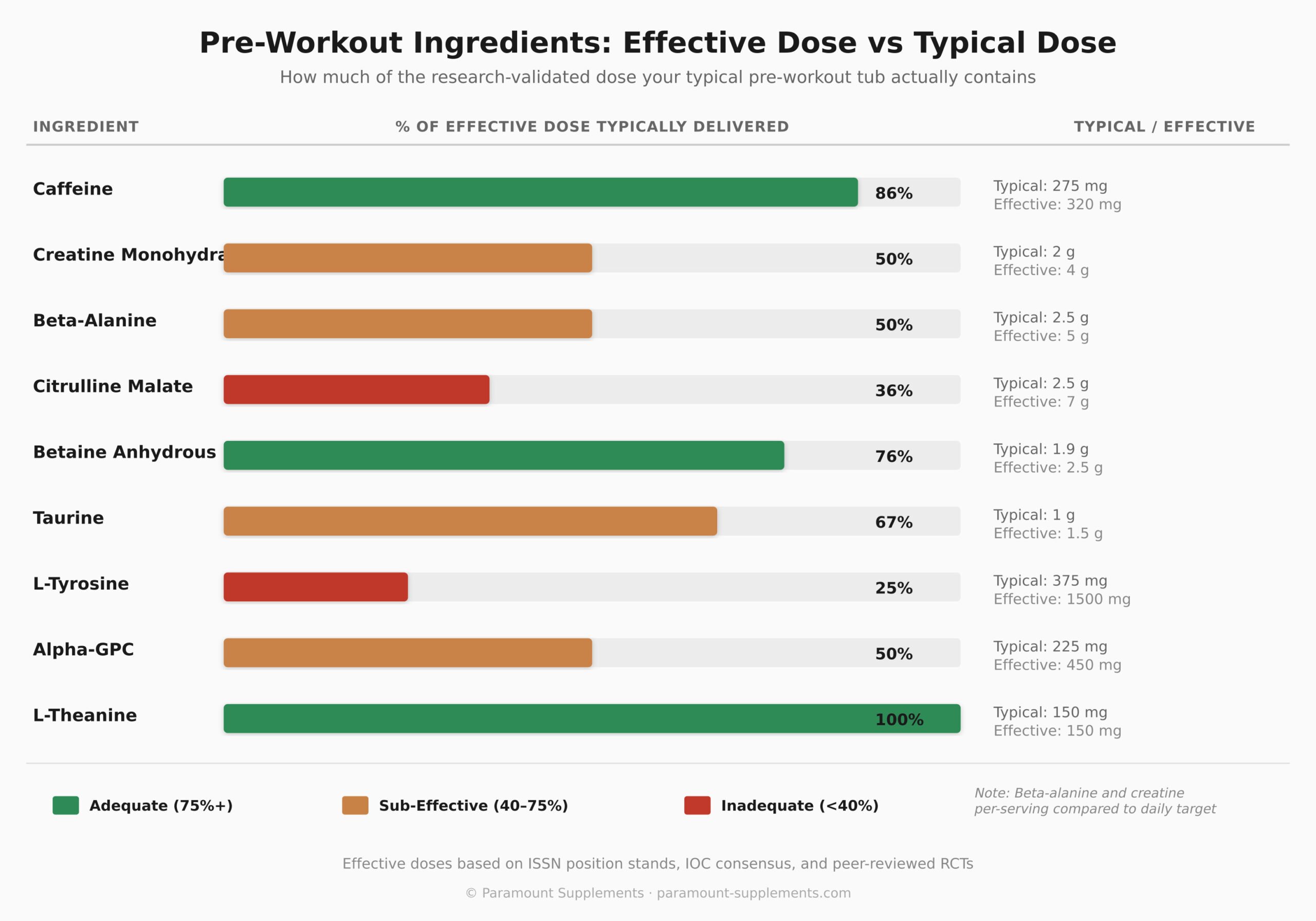
| Ingredient | Effective Dose | Typical Pre-Workout Dose | Status |
|---|---|---|---|
| Caffeine | 3–6 mg/kg (200–480 mg) | 150–400 mg | Often OK ✓ |
| Creatine Monohydrate | 3–5 g daily | 1–3 g | Often under-dosed ⚠️ |
| Beta-Alanine | 4–6 g daily | 1.6–3.2 g/serving | Sub-effective if standalone ⚠️ |
| Citrulline Malate | 6–8 g | 1–4 g | Frequently under-dosed ⚠️ |
| L-Citrulline (pure) | 3–6 g | 1–3 g | Often under-dosed ⚠️ |
| Betaine Anhydrous | 2.5 g daily | 1.25–2.5 g | OK to under-dosed |
| Taurine | 1–2 g | 1 g | Often OK ✓ |
| L-Tyrosine | 1–2 g | 250–500 mg | Often under-dosed ⚠️ |
| Alpha-GPC | 300–600 mg | 150–300 mg | OK to under-dosed |
| L-Theanine | 100–200 mg | 100–200 mg | Often OK ✓ |
The pattern is clear: among the ingredients most marketers tout as headline features, the ones most likely to be at effective dose are caffeine and taurine. The ones most likely to be sub-effective are exactly the ones consumers expect to deliver the “pump” and endurance benefits — citrulline, beta-alanine, and tyrosine.
This is why the pre-workout category as a whole disappoints so many buyers. The headline ingredients underperform expectations because they’re rarely present at research-validated doses, while the caffeine that’s typically dosed adequately gets credit for the entire formula’s perceived benefit.
Build Your Own Stack vs Buy Pre-Workout
The dose-math problem leads to a strategic question that most lifters never explicitly confront: is buying a pre-workout matrix actually better than assembling the same ingredients individually? Here’s how we’d think about it.
The DIY Stack Approach
A representative evidence-based DIY pre-workout stack might look like:
- Creatine monohydrate — 5 g
- Beta-alanine — 3 g (one of 2–3 daily doses)
- Citrulline malate — 6 g
- Caffeine — 300 mg (capsule or coffee)
- Optional: 1 g taurine, 200 mg theanine
Cost per serving at commodity pricing: roughly $0.80–1.20. Total monthly cost: $25–40. Every ingredient is at its research-validated dose. No proprietary blends. Full transparency on what you’re consuming.
DIY pros: precise dosing control, avoidance of marketing-driven ingredients you don’t need, dramatically lower per-gram cost, easy to adjust based on training cycle (more citrulline in hypertrophy blocks, more beta-alanine for metcon-heavy weeks, etc.).
DIY cons: multiple scoops to measure, less convenient than a single tub, no flavoring (most ingredients taste neutral to slightly bitter), requires understanding what you’re stacking.
The Pre-Workout Matrix Approach
A quality transparent-label pre-workout (with no proprietary blends, effective doses, third-party testing) costs roughly $1.50–2.50 per serving, often more for premium brands.
Pre-workout matrix pros: single scoop, flavored, convenient, includes ancillary ingredients (electrolytes, B-vitamins) that DIY doesn’t.
Pre-workout matrix cons: in our analysis, even the better products typically underdose at least one core ingredient. The convenience premium is real but priced higher than the actual ingredient cost.
Our Honest Take
For lifters who train consistently and care about evidence-based dosing, the DIY stack is the better path on every metric except convenience. For lifters who train sporadically, value mixing simplicity, or prefer a flavored beverage to plain ingredients in water, a well-formulated transparent-label pre-workout is reasonable — just verify the doses against the table in the previous section before buying.
Pre-Workout for Specific Training Goals
The “best” pre-workout depends on what you’re training for. Here’s how the ingredient priorities shift across common training contexts.
Hypertrophy and High-Volume Training
The hypertrophy lifter benefits most from ingredients that support training volume and pump — citrulline malate at full 6–8 g doses, beta-alanine for sustained capacity in the 8–20 rep range, betaine for power output across long sessions. Caffeine in the 200–300 mg range supports focus without being excessive for late-day training. Creatine if your daily total isn’t covered elsewhere.
Maximal Strength and Powerlifting
Pure strength athletes benefit most from caffeine for CNS drive and creatine for phosphocreatine saturation. Beta-alanine helps less because competition-style 1–3 rep sets finish too quickly for pH buffering to matter. Citrulline is optional — useful in volume work but less critical for the heavy singles themselves. Keep stimulant load moderate; you don’t need to be wired to grind a max single.
Endurance and Aerobic Training
Endurance athletes should prioritize caffeine and consider beetroot or nitrate supplementation separately. Beta-alanine helps for sub-25-minute high-intensity efforts but not for long, sustained aerobic work. Skip multi-stimulant stacks — endurance training rewards consistent output, not nervous-system overdrive.
HIIT, CrossFit, and Metcons
The strongest pre-workout case in the entire training spectrum. Caffeine for drive, beta-alanine for pH buffering during sustained intensity, creatine for the explosive components, citrulline for blood flow. This is where a well-formulated pre-workout earns its keep — the training demands match the ingredient pharmacology almost perfectly.
Late-Day or Caffeine-Sensitive Training
For users training in the evening or sensitive to caffeine’s sleep-disrupting effects, stim-free pre-workout formulations offer the pump, buffering, and substrate benefits without the central nervous system load. We cover this category in detail in our forthcoming stim-free pre-workout guide.
Frequently Asked Questions
What is the best pre-workout ingredient?
Caffeine is the most reliably effective single ingredient — most-studied, dose-responsive, and consistently improves strength, power, and endurance outcomes across hundreds of trials. For non-stimulant performance benefit, citrulline malate at 6–8 g is the highest-leverage ingredient when actually dosed properly. The ideal pre-workout combines both, plus accumulating ingredients like creatine and beta-alanine.
How much caffeine should pre-workout have?
The research-validated range is 3–6 mg of caffeine per kilogram of body weight. For an 80 kg lifter, that’s 240–480 mg per serving. Mainstream pre-workouts typically contain 150–400 mg, which is often appropriate but worth verifying against your specific body weight. Caffeine-sensitive users should target the lower end; experienced users can scale up.
Is the beta-alanine in pre-workout enough?
Usually not, on its own. The research-validated daily target is 4–6 g of beta-alanine, while typical pre-workouts contain 1.6–3.2 g per serving. If pre-workout is your only beta-alanine source, you’re likely under-dosing for full muscle carnosine accumulation. Supplement additional beta-alanine separately to hit the daily target.
What is a proprietary blend in pre-workout?
A proprietary blend is a labeling format that lists multiple ingredients under a single total weight without disclosing individual doses. It exists because U.S. supplement regulations permit this format — and brands use it because transparent individual dosing would reveal under-dosing. As a practical rule, avoid pre-workouts where significant portions of the formula sit inside proprietary blends.
Are pre-workout supplements safe?
Pre-workouts built around evidence-based ingredients at standard doses — caffeine in the 200–400 mg range, beta-alanine, citrulline, creatine — are well-tolerated in healthy adults. The risk increases when products combine multiple stimulants (caffeine + yohimbine + DMHA), use proprietary blends to hide ingredient quantities, or include un-tested novel stimulants. Stick to transparent-labeled, third-party-tested products at standard doses and the safety margin is wide.
Can I take pre-workout every day?
Yes, with one caveat: caffeine tolerance builds with consistent daily high-dose use. Daily pre-workout users with high caffeine content often find the supplement stops “feeling” like much after a few months. Cycling caffeine (lower doses on rest days, occasional 1–2 week deload) preserves the ergogenic effect. The non-caffeine ingredients can be taken daily without tolerance concerns.
What’s better — pre-workout or just coffee?
If you’re choosing strictly for caffeine, coffee delivers the same compound at a fraction of the cost. The case for pre-workout is the additional ingredients — citrulline, beta-alanine, creatine, betaine — that coffee doesn’t contain. If your pre-workout actually delivers those at effective doses, it offers something coffee can’t. If it doesn’t, you’re paying premium for flavored caffeine.
Do I need pre-workout to build muscle?
No. Pre-workout is performance optimization, not foundation. A lifter with adequate protein intake, consistent training, and good sleep will build significant muscle without any pre-workout supplementation. Pre-workout can support more productive sessions and modest performance gains over time, but it’s not a substitute for training, nutrition, or recovery fundamentals.
What’s the difference between stim and stim-free pre-workout?
Stim-based pre-workouts contain caffeine (sometimes additional stimulants) and produce the “wired” central nervous system effects most users associate with pre-workout. Stim-free formulations omit stimulants and focus on the non-caffeine ingredients — citrulline for pumps, beta-alanine for buffering, creatine, betaine. Stim-free is the right choice for late-day training, caffeine-sensitive users, or anyone wanting performance ingredients without the CNS load.
Should I take pre-workout on rest days?
It depends on which ingredients you’re prioritizing. The accumulating ingredients (creatine, beta-alanine, betaine) should be taken daily regardless of training — saturation matters more than timing. The acute ingredients (caffeine, citrulline) only matter on training days. If your pre-workout is heavy on accumulating ingredients, daily use makes sense. If it’s primarily caffeine and citrulline, save it for training days.
The Bottom Line
Most pre-workout products in the supplement aisle are paying for marketing — flashy proprietary blends, exotic-sounding ingredients, premium price tags — without delivering the effective doses of the ingredients that actually matter. The category is built on the gap between consumer expectations and label transparency, and the brands that benefit most are the ones that exploit that gap most aggressively.
The good news: the framework for cutting through the noise is simple. Skip proprietary blends. Verify effective doses against the table in Section 7. Audit the stimulant load. Look for third-party certification. Do the math, and ignore the marketing copy. Once you know what to look for, the difference between an evidence-based formula and a marketing product becomes visible at a glance.
For our tested shortlist of pre-workout products that pass every criterion, see our top picks for best pre-workout. For the broader cluster context, see our complete performance supplements hierarchy, plus the deep-dive guides on creatine and beta-alanine.
References
- Kerksick CM, Wilborn CD, Roberts MD, et al. (2018). ISSN exercise & sports nutrition review update: research & recommendations. Journal of the International Society of Sports Nutrition, 15:38. PMID: 30068354
- Guest NS, VanDusseldorp TA, Nelson MT, et al. (2021). International Society of Sports Nutrition position stand: caffeine and exercise performance. Journal of the International Society of Sports Nutrition, 18(1):1. PMID: 33388079
- Trexler ET, Smith-Ryan AE, Stout JR, et al. (2015). International Society of Sports Nutrition position stand: beta-alanine. Journal of the International Society of Sports Nutrition, 12:30. PMID: 26175657
- Kreider RB, Kalman DS, Antonio J, et al. (2017). International Society of Sports Nutrition position stand: safety and efficacy of creatine supplementation in exercise, sport, and medicine. Journal of the International Society of Sports Nutrition, 14:18. PMID: 28615996
- Pérez-Guisado J, Jakeman PM (2010). Citrulline malate enhances athletic anaerobic performance and relieves muscle soreness. Journal of Strength and Conditioning Research, 24(5):1215–1222. PMID: 20386132
- Waldron M, Patterson SD, Tallent J, Jeffries O (2018). The effects of an oral taurine dose and supplementation period on endurance exercise performance in humans: a meta-analysis. Sports Medicine, 48(5):1247–1253. PMID: 29546641
- Cholewa JM, Wyszczelska-Rokiel M, Glowacki R, et al. (2013). Effects of betaine on body composition, performance, and homocysteine thiolactone. Journal of the International Society of Sports Nutrition, 10(1):39. PMID: 23967897
- Hoffman JR, Ratamess NA, Faigenbaum AD, et al. (2008). Short-duration β-alanine supplementation increases training volume and reduces subjective feelings of fatigue in college football players. Nutrition Research, 28(1):31–35. PMID: 19083385
- Bellar D, LeBlanc NR, Campbell B (2015). The effect of 6 days of alpha glycerylphosphorylcholine on isometric strength. Journal of the International Society of Sports Nutrition, 12:42. PMID: 26604824
- Owen L, Sunram-Lea SI (2011). Metabolic agents that enhance ATP can improve cognitive functioning. Nutrients, 3(8):735–755. PMID: 22254121
- Haskell CF, Kennedy DO, Milne AL, Wesnes KA, Scholey AB (2008). The effects of L-theanine, caffeine and their combination on cognition and mood. Biological Psychology, 77(2):113–122. PMID: 18006208
- Cohen PA, Travis JC, Keizers PHJ, Deuster P, Venhuis BJ (2018). Four experimental stimulants found in sports and weight loss supplements: 2-amino-6-methylheptane (octodrine) and others. Clinical Toxicology, 56(6):421–426. PMID: 29115866