Beta-Alanine: The Complete Evidence-Based Guide (2026)
Ten to twelve weeks of consistent beta-alanine supplementation elevates muscle carnosine concentrations by roughly 60–80% — a physiological shift large enough to measurably change what your muscles can do during a specific kind of training (Trexler et al., 2015). That sentence captures both why beta-alanine is in Tier S of our performance supplements hierarchy and why most people who buy it never see the benefit they paid for: they use it for the wrong kind of training, quit before saturation hits, or panic at the tingling and stop.
This guide fixes all three. By the end, you’ll know exactly what beta-alanine does, the specific training contexts where it works (and where it doesn’t), why the tingling is harmless and irrelevant to whether the supplement is working, how to dose it for both effect and comfort, and which product features actually matter when you buy.
Every claim is anchored to peer-reviewed research: the ISSN position stand on beta-alanine, meta-analyses pooling over 40 randomized trials, and the original muscle-biopsy studies that established the mechanism. Where the evidence is strong, we say so plainly. Where it’s preliminary, we flag it.
What Beta-Alanine Actually Is
Beta-alanine is a non-essential amino acid your body produces in small amounts and obtains from dietary sources like poultry, beef, and fish. On its own, it has no known role in muscle function. What makes it interesting is what it becomes inside your muscle cell.
Once absorbed, beta-alanine combines with the amino acid histidine to form carnosine, a dipeptide stored in skeletal muscle in large concentrations. Carnosine — not beta-alanine — is the molecule doing the actual work during exercise. So the obvious question is: why supplement beta-alanine instead of carnosine directly?
The answer is bioavailability. Oral carnosine is rapidly hydrolyzed by the enzyme carnosinase in the gut and bloodstream before it can reach muscle tissue, breaking back down into its component amino acids — beta-alanine and histidine — which then have to be reassembled inside the muscle cell anyway. Supplementing beta-alanine directly is more efficient because histidine is already abundant in muscle, so the rate-limiting step in carnosine synthesis is beta-alanine availability (Hill et al., 2007). Flood the system with beta-alanine, give it ten weeks of consistent dosing, and muscle carnosine rises substantially.
This is the key insight most articles skip: beta-alanine is a precursor, not the active compound. You’re not supplementing for an acute effect that you’ll feel during a single workout. You’re slowly raising the concentration of an intramuscular buffer that, once elevated, changes what your muscles can do in a specific physiological window. That window is what the rest of this guide is about.
How Beta-Alanine Works (Mechanism)
To understand why beta-alanine improves some kinds of training and not others, you need to understand exactly what carnosine does inside the muscle cell during exercise.
The pH Buffering Problem
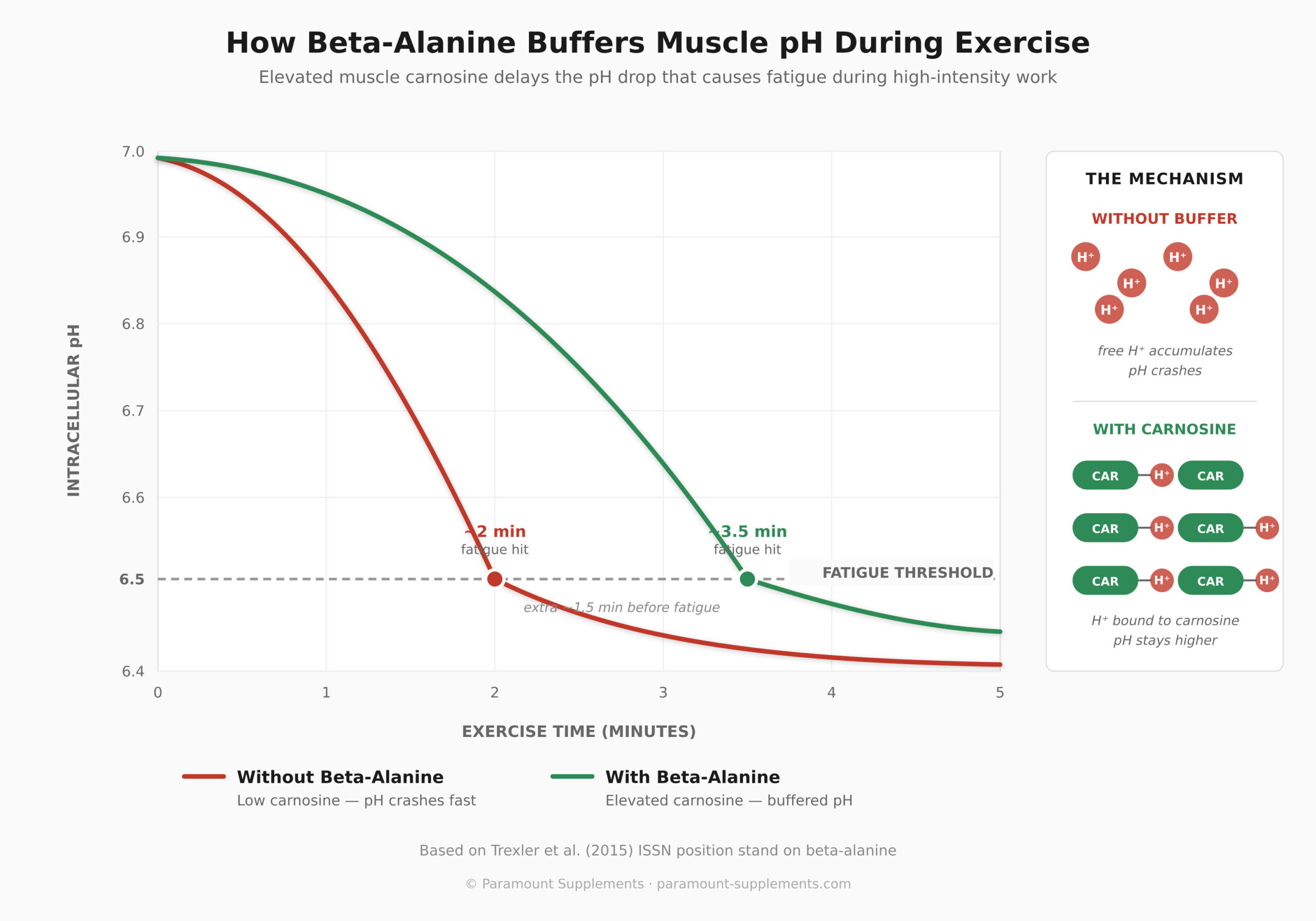
When your muscles work at high intensity for more than a few seconds, glycolysis ramps up to regenerate ATP. The byproduct is hydrogen ions (H+) — the same H+ that gets associated with lactic acid in gym mythology, though the lactate itself isn’t the problem. The problem is the H+ accumulation, which drops intracellular pH from a resting ~7.0 down toward ~6.5 during maximal sustained effort.
That pH drop matters because the enzymes and contractile proteins that produce muscle force don’t function optimally below a certain acidity. As H+ accumulates, force production declines, fatigue sets in, and the muscle effectively shuts down to protect itself. This is what’s happening biochemically when you hit the wall on rep 18 of a set of 20, or when you can’t sustain pace through the final 200m of an 800m race.
Carnosine as Intracellular pH Buffer
Carnosine’s structural chemistry makes it an effective H+ acceptor inside muscle cells. As H+ accumulates during exercise, carnosine binds it, slowing the rate of pH decline and pushing back the point at which acidosis-related fatigue forces you to stop. The ISSN position stand on beta-alanine summarizes this mechanism: elevated muscle carnosine concentrations directly improve intracellular pH regulation during high-intensity exercise (Trexler et al., 2015).
The performance translation: more carnosine in the tank means you can sustain higher outputs for longer before pH drops below your fatigue threshold. That’s it. That’s the entire mechanism. It’s also why beta-alanine works only in the specific time-domain where pH buffering is rate-limiting to performance — too short and you fatigue from other factors (ATP-PCr depletion, neural drive), too long and aerobic metabolism handles the load without significant H+ accumulation.
Why Elevated Muscle Carnosine Matters More Than Blood Beta-Alanine
One common confusion: people sometimes ask whether they should “take beta-alanine pre-workout” the way they take caffeine. The answer is no — and understanding why clarifies the entire dosing logic. Acute blood beta-alanine concentrations after a single dose don’t help you in that workout. What matters is the accumulated muscle carnosine concentration, which only rises slowly over weeks of consistent dosing. A single 5 g dose 30 minutes before training does essentially nothing for performance that day. Ten weeks of 4–6 g daily doses, on the other hand, leaves you with elevated carnosine that’s available every time you train — workout or rest day, morning or evening.
Proven Benefits (Evidence-Weighted)
Beta-alanine’s benefit profile is unusually specific. Unlike creatine, which produces measurable gains across nearly every form of strength and power training, beta-alanine works strongly in one specific time domain and weakly or not at all outside it. Below is our evidence-weighted breakdown — same star rating system used throughout our cluster.
| Benefit | Evidence Level | Effect Size |
|---|---|---|
| Exercise capacity, 1–4 min duration | Strong | ~+2.85% performance gain (Hobson meta-analysis) |
| Repeated sprint performance | Good | Significant improvement in repeated-bout protocols |
| Strength endurance (8–20 rep range) | Good | More reps before failure across multiple sets |
| Lean mass | Moderate | Modest, indirect via increased training volume |
| Endurance, >25 min | Limited | Small or no effect in true aerobic events |
| Maximal strength (1RM) | Insufficient | Time domain too short for pH buffering to matter |
| Cognitive function | Speculative | Preliminary data, no clear consensus |
The Headline Number: ~3% in the Right Time Domain
The most-cited single number for beta-alanine’s effect size comes from Hobson and colleagues’ 2012 meta-analysis, which pooled results across 360 subjects from 15 controlled studies and found an average performance improvement of approximately 2.85% in exercise lasting 60 seconds to 4 minutes (Hobson et al., 2012). A more recent systematic review by Saunders and colleagues in the British Journal of Sports Medicine, pooling 40 studies, confirmed those findings and extended them to additional exercise modalities, with the strongest effects consistently in the same time window (Saunders et al., 2017).
2.85% sounds small in isolation, but consider what it means in practice: one extra rep on a heavy set of 12, a measurable few seconds shaved off an 800m run, an extra round of effort in a CrossFit metcon. Compounded across years of training, the volume difference matters. And in any competition decided by margins under 5%, a near-3% reliable edge is meaningful.
What Beta-Alanine Doesn’t Do
Beta-alanine doesn’t improve maximal strength singles, marathon pacing, vertical jump, or 40-yard sprint. The marketing on some pre-workouts implies a universal “energy and endurance” benefit, which conflates the supplement’s actual mechanism with a generic stimulant effect. The performance improvements are real but bounded — they live within a specific physiological window, and outside that window, beta-alanine is roughly as useful as plain table salt.
The Time-Domain Question — When Beta-Alanine Actually Works
This section is the one most articles skip, and skipping it is why so many beta-alanine buyers end up disappointed. The supplement works exclusively in the metabolic window where intracellular pH buffering is the rate-limiting factor for performance. Step outside that window in either direction and the benefit disappears.
| Exercise Duration | Energy System | Beta-Alanine Effect |
|---|---|---|
| Under 60 seconds | ATP-PCr dominant | Minimal — fatigue comes from phosphocreatine depletion, not pH |
| 60 seconds – 4 minutes | Glycolytic dominant | Strongest effect — pH buffering is rate-limiting |
| 4–25 minutes | Mixed glycolytic + aerobic | Moderate — effect depends on intensity and lactate threshold |
| Over 25 minutes | Aerobic dominant | Minimal — aerobic metabolism doesn’t accumulate H+ |
Under 60 Seconds: Too Short
Maximal strength singles, short sprints, and explosive single efforts (a heavy clean, a vertical jump, a 40-yard dash) are fueled primarily by the ATP-phosphocreatine system. The fatigue at the end of these efforts comes from depleted phosphocreatine, not from accumulated H+. This is creatine’s territory, not beta-alanine’s.
60 Seconds to 4 Minutes: The Sweet Spot
This is where beta-alanine earns its Tier S placement. The exercise modalities that live here include heavy sets of 8–20 reps in the weight room, 400m to 1500m running, CrossFit-style metcons, MMA and combat sport rounds, repeated sprint protocols in team sports, swimming events in the 100m–400m range. In all of these, glycolytic ATP regeneration is dominant, H+ accumulates faster than it can be cleared, and intracellular pH drops are rate-limiting to continued performance. Elevated muscle carnosine directly delays that pH drop — more reps, more rounds, faster times.
4 to 25 Minutes: Diminishing Returns
The longer the effort, the more aerobic metabolism contributes and the less H+ accumulation matters. Beta-alanine still produces measurable effects in this range — particularly in efforts performed at or above lactate threshold — but the magnitude is smaller and the benefit is more variable across individuals.
Over 25 Minutes: Wrong Tool
True aerobic endurance events — half marathons, marathons, long-distance cycling, ultras — show little to no meaningful benefit from beta-alanine in the research. Aerobic metabolism produces ATP without significant H+ accumulation, so the pH buffering mechanism that drives beta-alanine’s effects simply isn’t relevant. Endurance athletes are better served by caffeine, beetroot, and adequate carbohydrate intake.
The Paresthesia (Tingling) Truth
Within 15–20 minutes of taking a single dose of beta-alanine above roughly 800 mg, most users experience a distinctive tingling, prickling, or itching sensation — usually on the face, neck, scalp, hands, or upper torso. It’s called paresthesia, it’s the single most frequently searched question about beta-alanine, and it’s also the single most misunderstood aspect of the supplement.
What Paresthesia Actually Is
Paresthesia from beta-alanine is caused by the temporary activation of specific sensory nerve receptors in the skin (research suggests MrgprD-expressing neurons). The mechanism is purely neurological — sensory nerves firing in response to beta-alanine binding — and produces no tissue damage, no inflammatory response, no measurable physiological harm (Trexler et al., 2015).
The sensation peaks 30–60 minutes after dosing and dissipates within 60–90 minutes as plasma beta-alanine concentrations decline. It’s harmless, transient, and entirely benign — but it can be intense and uncomfortable, particularly for first-time users at higher single doses.
The Critical Point: Tingling Has Nothing to Do With Whether It’s Working
This is the most important sentence in this entire guide: the tingling sensation is not the supplement working. It’s a transient skin response to acute blood beta-alanine elevation. The actual benefit — muscle carnosine accumulation — happens slowly over weeks regardless of whether you feel anything in the moment.
Users who feel no tingling whatsoever are not getting “less effect.” Users who tingle intensely are not getting “more effect.” The presence, absence, and intensity of paresthesia correlate primarily with dose size and individual nerve sensitivity, not with how much carnosine your muscles are ultimately accumulating.
How to Minimize Paresthesia: Split Dosing
The cleanest way to eliminate or substantially reduce paresthesia is to split your daily dose into smaller administrations. Instead of taking 4 g in one sitting (which produces a sharp plasma spike and strong paresthesia), take 1–2 g four times throughout the day. The lower individual peak concentrations stay below most users’ paresthesia threshold while delivering the same total daily dose for carnosine synthesis.
Sustained-Release Formulations
Sustained-release beta-alanine products (notably CarnoSyn SR®) extend absorption over several hours, blunting the plasma spike and dramatically reducing paresthesia even at higher single doses. Research from Décombaz and colleagues showed that sustained-release tablets produced significantly lower peak plasma concentrations and dramatically less paresthesia than equivalent doses of standard beta-alanine, with comparable total absorption (Décombaz et al., 2012). They cost more per gram, but for users who find the tingling intolerable, the trade-off is reasonable.
Dosing Protocols
Beta-alanine dosing is unusual among performance supplements in that there’s no acute use case and no loading phase analogous to creatine’s. The goal is slow, steady muscle carnosine accumulation, which means consistent daily dosing for at least 10–12 weeks before maximum effect.
Standard Daily Dose
The ISSN position stand recommends 4–6 g per day of beta-alanine, taken consistently for at least 4 weeks for measurable performance benefits and 10–12 weeks for maximum muscle carnosine accumulation (Trexler et al., 2015). Doses below 3 g/day produce slower and smaller effects. Doses above 6 g/day don’t appear to accelerate the effect meaningfully — carnosine synthesis is rate-limited by enzymatic capacity, not just substrate availability.
Split Dosing for Comfort
For paresthesia minimization, split the daily total into smaller doses: 1–2 g taken 2–4 times throughout the day, ideally with meals. This approach delivers the same total daily intake while keeping individual plasma peaks below the paresthesia threshold for most users.
Time to Effect
Expect a slow build. Measurable performance improvements typically appear after 4 weeks of consistent dosing, with continued gains through weeks 8–10 and a plateau around weeks 10–12 as muscle carnosine reaches maximum accumulation. There is no shortcut. Loading protocols haven’t shown faster results — the rate-limiting step is muscle uptake and enzymatic synthesis, not plasma availability.
Wash-Out and Cycling
Muscle carnosine concentrations decline slowly after stopping supplementation — significantly slower than they accumulate. Research suggests it takes roughly 15 weeks for elevated carnosine to return to baseline after discontinuation. This slow decay is useful: brief missed days don’t unwind your accumulated benefit, and you can pause supplementation for a few weeks (during travel, financial constraints, etc.) without losing much. Cycling beta-alanine is unnecessary and counterproductive — there’s no tolerance to build to, and you’re working against your own accumulated investment.
With Food, Insulin, and Carbohydrates
Taking beta-alanine with a meal containing carbohydrates and protein modestly enhances muscle uptake via insulin-mediated transport, similar to creatine. The effect is small and entirely optional. Take it whenever is most convenient and consistent.
Side Effects & Safety
Beta-alanine has accumulated a solid safety profile over decades of research at standard doses. The handful of theoretical concerns that have been raised have either been resolved by direct testing or remain plausible only at doses far above what’s used in supplementation.
Paresthesia: Not a Side Effect
Paresthesia is the most-discussed sensation associated with beta-alanine, but it’s not technically an adverse effect — it’s a benign transient nerve response. No tissue damage, no inflammatory response, no measurable physiological consequence. Uncomfortable for some users, but not harmful.
Histidine Depletion: Theoretical, Refuted
Early concern: since beta-alanine combines with histidine to form carnosine, long-term high-dose supplementation might theoretically deplete the body’s histidine pool. Direct testing in human subjects has not supported this concern. Plasma and muscle histidine concentrations have remained stable across multi-month supplementation trials at standard doses (Trexler et al., 2015). The theoretical concern hasn’t materialized in practice.
Taurine Interactions
Beta-alanine and taurine compete for the same membrane transporter. In theory, chronic high-dose beta-alanine could reduce taurine uptake. In practice, controlled trials have not shown clinically meaningful taurine depletion at standard supplementation doses in humans. If you’re taking taurine for other reasons (e.g., in a pre-workout formula), spacing it 2–3 hours from beta-alanine doses is a reasonable conservative measure.
Long-Term Safety Data
Multiple controlled trials lasting 8–24 weeks at doses of 4–6 g per day have reported no clinically significant adverse effects on kidney function, liver function, hematological markers, or other measured outcomes in healthy adults (Trexler et al., 2015). The supplement has not been studied for periods exceeding two years in any single cohort, so true very-long-term effects are technically unknown — though no mechanism for delayed harm has been proposed.
Pregnancy, Nursing, and Adolescents
Beta-alanine has not been studied in pregnant or nursing women. This isn’t evidence of harm — it’s the standard absence of research that surrounds most supplements in those populations. The conservative recommendation is to avoid supplementation during pregnancy and nursing in the absence of data. Use in adolescent athletes is studied less than adult use; safety profiles at standard doses appear comparable, but parental and coach involvement deserve the first word at younger ages.
Who Benefits Most From Beta-Alanine
Beta-alanine’s effect is so time-domain specific that the “should I take it” question is really the same as “do I train in the 1–4 minute window?” Below is a practical breakdown by training type.
Strength + Hypertrophy Lifters (8–20 Rep Range)
Strong yes. Heavy sets in the 8–20 rep range fall squarely in beta-alanine’s sweet spot — sufficient duration for glycolytic dominance and significant H+ accumulation, but not so long that aerobic metabolism takes over. The result: more reps before failure, especially on the second, third, and fourth set when fatigue compounds. Over months of training, the extra volume converts to measurable hypertrophy and strength gains.
CrossFit and Functional Fitness Athletes
Strong yes. CrossFit-style metcons regularly land in the 1–10 minute high-intensity range, with many of the most-feared workouts (Fran, Diane, Helen) finishing in 2–8 minutes at maximum sustainable output. This is beta-alanine’s home turf.
Combat Sports Athletes
Strong yes. MMA, boxing, and wrestling rounds typically last 3–5 minutes at very high intensity — exactly where pH buffering becomes rate-limiting. Beta-alanine supplementation has shown direct performance carryover in combat sport-specific testing.
Team Sport Athletes
Yes, particularly for sports with repeated sprint demands — soccer, rugby, basketball, hockey. The benefit comes less from any single sprint and more from sustained capacity to repeat high-intensity efforts over the course of a half or game.
Middle-Distance Track Athletes
Strong yes. The 400m, 800m, and 1500m events live in beta-alanine’s strongest evidence window. Competitive athletes in these distances should consider supplementation a baseline ergogenic.
Powerlifters and Pure Strength Athletes
Marginal. Competition-style 1–3 rep sets finish too quickly for pH buffering to matter much. Beta-alanine may still help with accessory hypertrophy work in the 8–20 rep range, but it’s not a competition-day priority.
Endurance Runners and Cyclists
Marginal. True aerobic endurance events (half marathon and longer) don’t accumulate enough H+ for beta-alanine to make a meaningful difference. Endurance athletes should prioritize caffeine, beetroot, and carbohydrate strategy.
Women
Same protocol, same effect profile. Research on female-specific responses to beta-alanine has consistently shown comparable benefits to male subjects at equivalent body-weight-adjusted doses, with no meaningful sex-based differences in muscle carnosine accumulation or performance outcomes. Dosing recommendations are identical.
Beta-Alanine + Creatine: The Tier S Stack
Two of the four supplements in Tier S of our performance supplements hierarchy are creatine and beta-alanine — and they work through entirely different energy systems, which makes them additive rather than redundant.
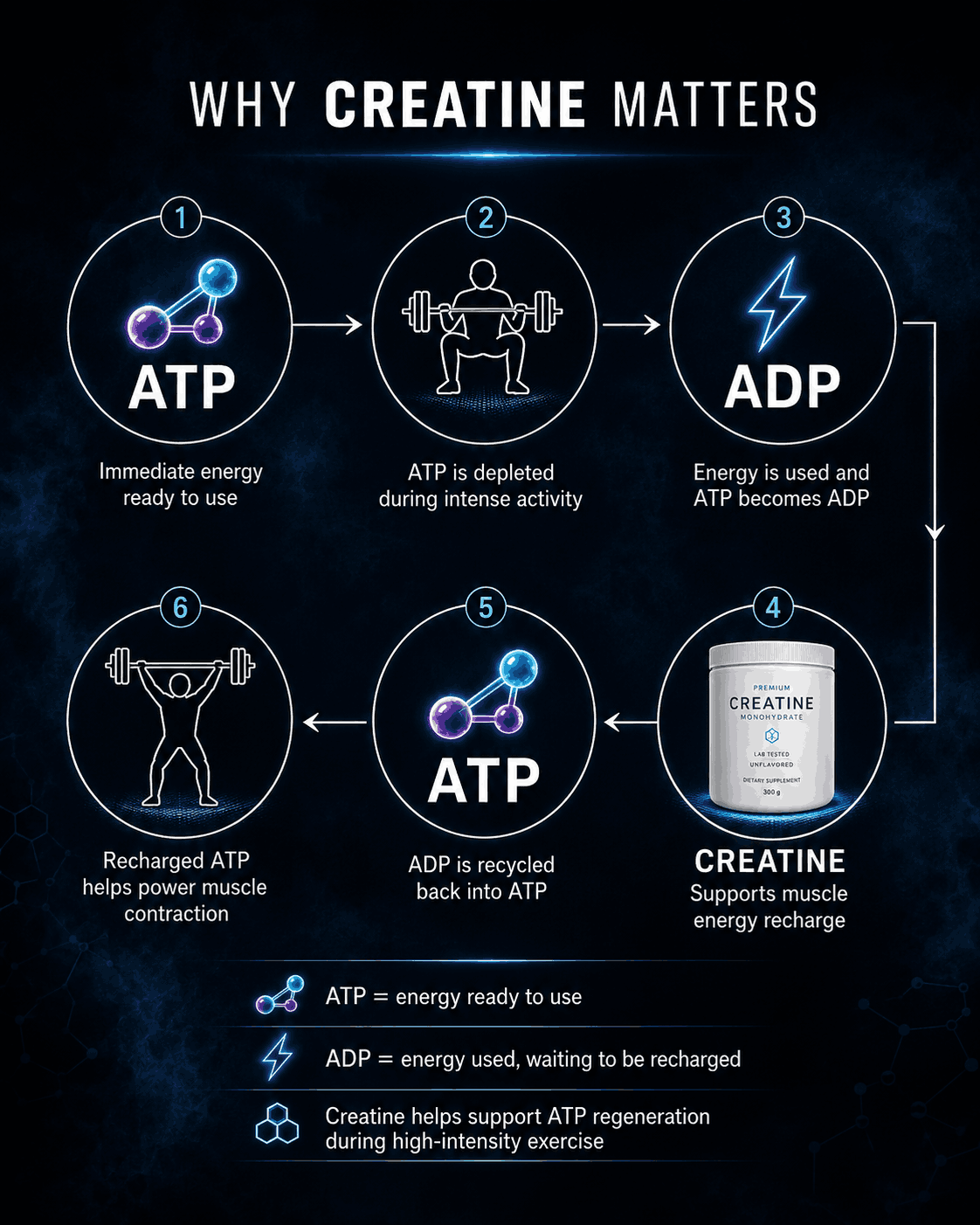
Creatine increases phosphocreatine stores, fueling the ATP-PCr system that dominates efforts under 12 seconds. Beta-alanine elevates muscle carnosine, buffering pH during glycolytic efforts of 60 seconds to 4 minutes. They cover complementary time domains: creatine for the short, explosive part of a training session (heavy singles, doubles, triples); beta-alanine for the longer, fatigue-accumulating part (working sets of 8–20, repeated sprints, metcons).
Studies directly testing the combination have shown additive — not antagonistic — effects on training adaptations. The two supplements share no transporter competition, no metabolic conflict, and no interaction concerns. For most lifters and athletes, taking both is the highest-leverage two-supplement stack in the entire performance category.
For the full deep-dive on creatine, see our complete evidence-based creatine guide.
How to Choose a Quality Beta-Alanine
Beta-alanine, like creatine, is a commodity raw material. The active molecule is identical from one quality manufacturer to the next. The variables that matter are purity, dose accuracy, and absence of underdosed proprietary blend trickery.
Look for CarnoSyn® Designation
CarnoSyn® is the patent-protected beta-alanine raw material manufactured by Natural Alternatives International. The overwhelming majority of published beta-alanine research has used CarnoSyn® specifically, and the brand has independent purity testing as a standard. “Contains CarnoSyn®” on the label tells you that the active ingredient matches what the trials actually used. The sustained-release version (CarnoSyn SR®) is the standard for paresthesia-minimizing formulations.
Third-Party Testing
Look for Informed Sport or NSF Certified for Sport on the tub. For competing athletes subject to drug testing, this isn’t optional — contaminated supplements have ended careers. For non-competing consumers, it’s still a meaningful trust signal.
Powder Over Capsules
Beta-alanine is dosed in grams, not milligrams. A 4 g daily dose in capsule form means swallowing 8–10 capsules per day depending on capsule fill weight. Powder is dramatically cheaper per gram, mixes easily in water, and makes split dosing trivial. Capsules exist for convenience, but the trade-off in cost is steep.
Standalone Over Pre-Workout Matrix
Many pre-workouts include beta-alanine in proprietary blends or at sub-effective doses (typically 1–2 g per serving when 4–6 g daily is the research-backed target). A standalone beta-alanine product lets you hit the actual research dose without paying for a pre-workout’s worth of other ingredients you may not need. If you also want caffeine, citrulline, or creatine, taking them as separate single-ingredient products almost always works out cheaper and more accurately dosed than buying a “matrix” pre-workout.
Skip the Marketing Theater
“Advanced delivery system.” “Enhanced bioavailability.” “Carnosine matrix complex.” None of these mean anything for beta-alanine. The molecule is well-absorbed orally, well-studied, and works the same whether you buy it in fancy packaging or in a plain commodity tub.
Frequently Asked Questions
Does beta-alanine actually work?
Yes, in a specific training context. Meta-analyses pooling over 40 controlled studies have consistently shown roughly 2.85% performance improvement in exercise lasting 60 seconds to 4 minutes — heavy sets of 8–20 reps, 400–1500m running, CrossFit metcons, combat sport rounds. Outside that time window, the effect drops sharply. If your training lives in the sweet spot, beta-alanine is one of the most reliably effective supplements available.
Why does beta-alanine make me tingle?
The tingling is called paresthesia — a temporary activation of sensory nerve receptors in the skin caused by rapid plasma beta-alanine elevation. It’s neurologically harmless, peaks within an hour of dosing, and fades within 90 minutes. It produces no tissue damage and has no relationship to whether the supplement is working in your muscles.
Can I take beta-alanine without the tingling?
Yes. Split your daily dose into smaller doses (1–2 g taken 2–4 times throughout the day) to keep individual plasma peaks below most users’ paresthesia threshold. Alternatively, use a sustained-release formulation (CarnoSyn SR®), which extends absorption over several hours and dramatically reduces tingling even at full daily doses.
Should I take beta-alanine on rest days?
Yes. Beta-alanine’s effect comes from gradually elevating muscle carnosine concentrations, which happens regardless of whether you train that day. Consistent daily dosing is what builds the benefit. Skipping rest days slows your progress to full saturation.
Beta-alanine vs creatine — which is better?
They’re not competitors — they cover different energy systems and complementary time domains. Creatine fuels efforts under 12 seconds (max singles, sprints, jumps). Beta-alanine buffers pH in efforts of 60 seconds to 4 minutes (working sets, intervals, metcons). Most lifters and athletes benefit from taking both. If forced to pick one, creatine has broader applicability and faster results.
How long until I notice beta-alanine working?
Plan for 4 weeks before performance becomes measurably better, and 10–12 weeks before muscle carnosine reaches maximum accumulation. There’s no loading protocol that meaningfully accelerates this — carnosine synthesis is enzymatically rate-limited. Daily consistency over months is what produces the benefit.
Can I take beta-alanine in my pre-workout?
You can, but most pre-workouts contain sub-effective doses (1–2 g per serving versus the 4–6 g daily target). Treating pre-workout beta-alanine as your sole source typically means you’re under-dosing. The cleanest approach: separate standalone beta-alanine product, split-dosed throughout the day, with your pre-workout providing caffeine and other ingredients independently.
Is beta-alanine safe long term?
The accumulated safety data from trials lasting 8–24 weeks at standard doses (4–6 g/day) show no clinically meaningful adverse effects in healthy adults. No mechanism for delayed long-term harm has been proposed in the literature. The supplement has not been studied for periods exceeding two years in a single cohort, so very-long-term effects are technically unknown but no signal of concern exists.
Does beta-alanine cause water retention like creatine?
No. Unlike creatine, beta-alanine is not osmotically active and doesn’t pull water into muscle cells. There’s no cell volumization effect, no measurable “fuller muscle” appearance, and no water-weight gain associated with supplementation.
Can women take beta-alanine?
Yes. Research has consistently shown the same effect profile, dosing requirements, and safety profile in women as in men at body-weight-adjusted equivalent doses. There’s no sex-based reason to adjust the protocol — same 4–6 g daily target, same 10–12 week timeline, same benefits in the same training contexts.
The Bottom Line
Beta-alanine is one of the most specifically-targeted supplements in sports nutrition: it works powerfully in a narrow time domain, weakly outside it, and produces a transient skin tingle that has nothing to do with whether you’re getting the benefit. Most users who quit on it do so for the wrong reasons — they expected an acute pre-workout effect, panicked at the paresthesia, or used it for training that doesn’t live in the 1–4 minute window.
If your training does live in that window — heavy hypertrophy work, CrossFit, combat sports, middle-distance running, team sport conditioning — beta-alanine deserves a permanent spot in your stack alongside creatine. Buy a quality CarnoSyn®-sourced product, take 4–6 g per day split into smaller doses, give it 10–12 weeks of consistent use, and let the carnosine accumulate. The benefits will show up where they’re supposed to: more reps on the last set, more rounds at the same intensity, faster final laps when everyone else is fading.
For our tested product shortlist meeting all quality criteria, see our top picks for best beta-alanine. For the broader cluster context, see our complete performance supplements hierarchy and creatine guide.
References
- Trexler ET, Smith-Ryan AE, Stout JR, et al. (2015). International Society of Sports Nutrition position stand: beta-alanine. Journal of the International Society of Sports Nutrition, 12:30. PMID: 26175657
- Hobson RM, Saunders B, Ball G, Harris RC, Sale C (2012). Effects of β-alanine supplementation on exercise performance: a meta-analysis. Amino Acids, 43(1):25–37. PMID: 22270875
- Saunders B, Elliott-Sale K, Artioli GG, et al. (2017). β-alanine supplementation to improve exercise capacity and performance: a systematic review and meta-analysis. British Journal of Sports Medicine, 51(8):658–669. PMID: 27797728
- Hill CA, Harris RC, Kim HJ, et al. (2007). Influence of β-alanine supplementation on skeletal muscle carnosine concentrations and high intensity cycling capacity. Amino Acids, 32(2):225–233. PMID: 16868650
- Décombaz J, Beaumont M, Vuichoud J, Bouisset F, Stellingwerff T (2012). Effect of slow-release β-alanine tablets on absorption kinetics and paresthesia. Amino Acids, 43(1):67–76. PMID: 21847611
- Harris RC, Tallon MJ, Dunnett M, et al. (2006). The absorption of orally supplied β-alanine and its effect on muscle carnosine synthesis in human vastus lateralis. Amino Acids, 30(3):279–289. PMID: 16554972
- Stellingwerff T, Decombaz J, Harris RC, Boesch C (2012). Optimizing human in vivo dosing and delivery of β-alanine supplements for muscle carnosine synthesis. Amino Acids, 43(1):57–65. PMID: 22270874
- Smith-Ryan AE, Fukuda DH, Stout JR, Kendall KL (2012). High-velocity intermittent running: effects of beta-alanine supplementation. Journal of Strength and Conditioning Research, 26(10):2798–2805. PMID: 22130398
- Hoffman J, Ratamess NA, Kang J, et al. (2008). Effect of creatine and β-alanine supplementation on performance and endocrine responses in strength/power athletes. International Journal of Sport Nutrition and Exercise Metabolism, 16(4):430–446. PMID: 17136944
- Kreider RB, Kalman DS, Antonio J, et al. (2017). International Society of Sports Nutrition position stand: safety and efficacy of creatine supplementation in exercise, sport, and medicine. Journal of the International Society of Sports Nutrition, 14:18. PMID: 28615996